
If you browse online car auctions long enough, you’ll constantly see one phrase repeated on vehicle listings:
“Run and Drive.”
For many first-time buyers, this label sounds reassuring — but it’s also one of the most misunderstood terms in the auction world. Some buyers assume it means the car is ready to be driven home. Others think it guarantees no mechanical issues.
The reality is more nuanced.
This guide explains exactly what Run and Drive means, what it does not mean, and how to evaluate these vehicles properly when buying through SalvageReseller.
1. What Does “Run and Drive” Actually Mean?
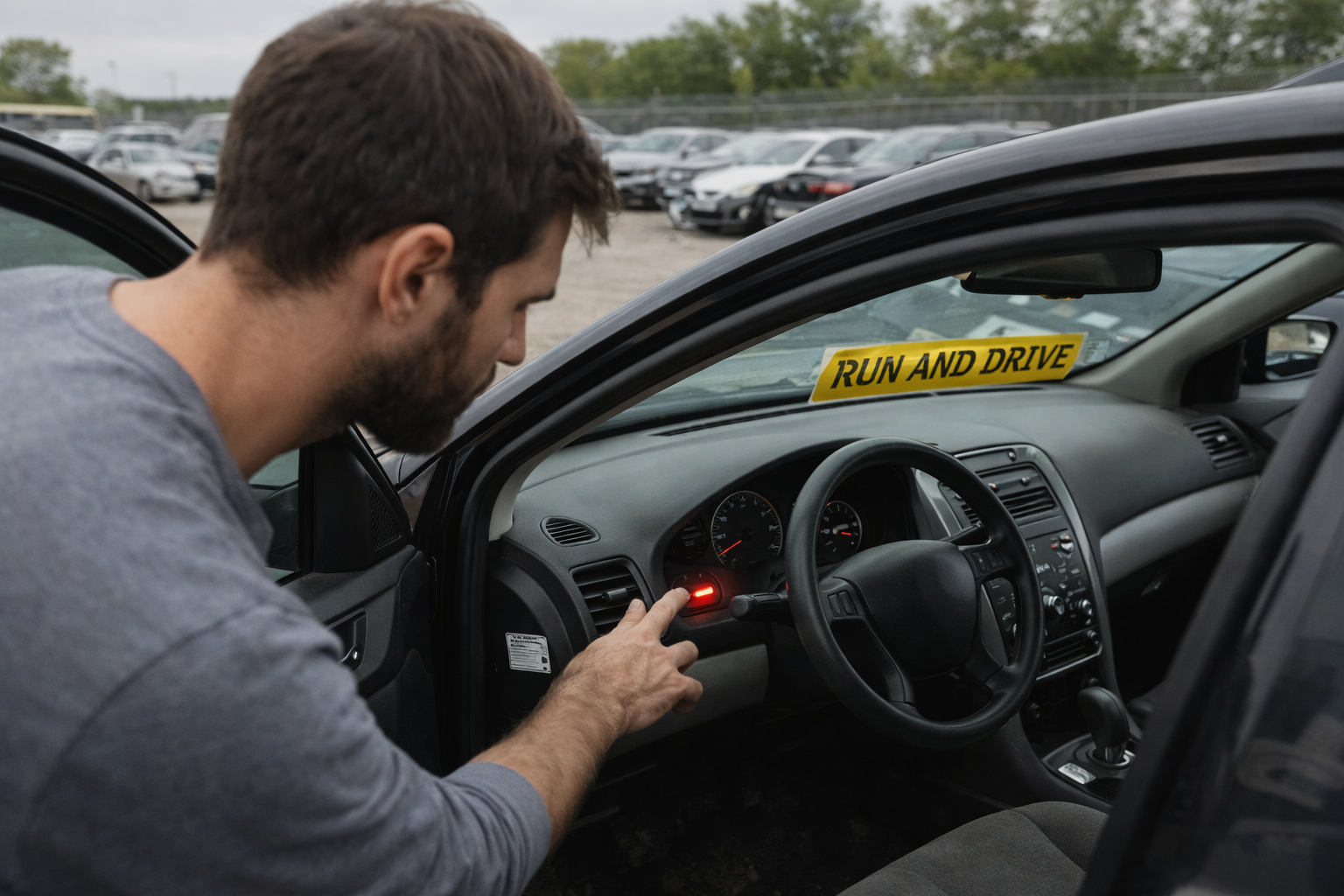
At auction, Run and Drive simply indicates that:
-
The vehicle started under its own power
-
It moved forward and backward
-
This occurred at the time it was checked by the auction yard
That’s it.
It does not mean:
-
The car is roadworthy
-
The car is mechanically perfect
-
There are no warning lights
-
The transmission shifts normally at highway speeds
-
The vehicle is safe for immediate daily use
It’s a basic operational status — not a certification.
2. Why “Run and Drive” Is Still Valuable
Even with its limitations, the Run and Drive label is important because it usually indicates:
-
The engine turns on
-
The vehicle is not completely dead
-
Major components may still be functional
-
Transportation may be cheaper than for inoperable units
For buyers, this often means lower risk compared to non-running vehicles, especially when combined with good photos and history.
3. Common Misconceptions About Run and Drive Vehicles
❌ Myth: “Run and Drive means I can drive it home”
Many Run and Drive vehicles still need:
-
Repairs
-
Alignment
-
Tire replacement
-
Brake work
-
Sensor resets
❌ Myth: “There are no mechanical issues”
The vehicle may still have:
-
Engine misfires
-
Transmission slipping
-
Cooling system issues
-
Electrical problems
❌ Myth: “The condition won’t change”
A car can be Run and Drive at inspection time but develop issues later, especially if it’s been sitting.
4. How SalvageReseller Helps You Evaluate Run and Drive Cars
SalvageReseller gives buyers tools to go beyond the label:
✔ Detailed Photo Sets
High-resolution images help you spot:
-
Fluid leaks
-
Dashboard warning lights
-
Engine bay damage
-
Undercarriage issues
✔ Damage Classification
Primary and secondary damage listings help you understand why the car ended up at auction.
✔ VIN Reports
Checking VIN history can reveal:
-
Previous accidents
-
Flood branding
-
Theft recovery
-
Mileage inconsistencies
✔ Price History
Seeing how similar vehicles sold in the past helps you avoid overpaying.
5. Transportation Considerations for Run and Drive Vehicles
Many buyers assume Run and Drive cars are always cheaper to ship. That’s often true — but not guaranteed.
With SalvageReseller’s Transportation Estimator, powered by Riteway Transport, you can:
-
Enter your ZIP code
-
Select open or enclosed transport
-
See an estimated shipping price
-
Estimate transit time
This helps you decide whether driving, towing, or shipping makes the most sense.
6. When You Should Be Extra Cautious — Even if It’s Run and Drive
Be more careful when:
-
The damage involves the front end or engine bay
-
Airbags were deployed
-
The car has flood or fire branding
-
The photos show disconnected components
-
The vehicle has been sitting for months
In these cases, a third-party inspection may be a smart move before bidding.
7. Run and Drive vs. Enhanced Vehicle vs. Inoperable
Here’s a simple comparison:
-
Run and Drive: Starts and moves under its own power
-
Enhanced Vehicle: Cleaned, detailed, sometimes minor cosmetic improvements
-
Inoperable: Does not start or move
Run and Drive vehicles typically sit in the middle in terms of price and risk.
8. Who Benefits Most from Run and Drive Vehicles?
These vehicles are popular among:
-
DIY mechanics
-
Small dealers
-
Export buyers
-
First-time auction buyers
-
Buyers looking to minimize transport complexity
They’re often a good balance between cost and usability.
Final Thoughts
The Run and Drive label is a useful starting point — but it should never be your only decision factor.
Smart buyers combine that label with:
-
Photo analysis
-
VIN checks
-
Cost calculations
-
Transport estimates
-
Realistic expectations
With SalvageReseller’s tools, you can evaluate Run and Drive vehicles with clarity instead of assumptions — and make better buying decisions every time.