

How to Sell Your Car at Auction: Step-by-Step Guide + Pro Tips

Selling a car sounds easy until you try it. Countless messages, low offers, no-shows, and uncomfortable meetings; selling your old car can seem like a full-time job. But what if there was a quicker, simpler method that avoids all the trouble?


Car auctions are that way.They are quick, effective, and frequently more lucrative, particularly if your vehicle isn’t in ideal shape. This guide will outline the detailed procedure for selling your car at an auction in the auto auction USA market. No matter if you have a polished commuter or a scratched-up project vehicle, this guide will assist you in maximizing its value.


Why Sell Your Car at Auction?


If you’ve never considered an auction before, you’re not alone. Most people assume auctions are just for rare classics or dealers. Not true.Selling through an auction, especially on platforms that cater to buyers who purchase salvage vehicles, can offer huge advantages:


  • Speed: Cars often sell within days, not weeks.
  • Visibility: Your vehicle is shown to thousands of buyers across the auto auction USA market.
  • Less Stress: No strangers at your door, no back-and-forth negotiations.
  • Competitive Offers: Bidders can drive the price higher than you expect.


And here’s the best part: even cars with damage, salvage titles, or mechanical issues can sell well. Some buyers are specifically looking for that.


Step 1: Pick the Right Auction Platform


All auctions are not created equal.If your car is clean and in great shape, a public auction might work. But if it has issues, or if you simply want access to more serious buyers, consider dealer auctions. These are where pros, mechanics, rebuilders, and resellers hunt for deals.


The catch? Dealer auctions usually require a license.That’s where working with a licensed broker like Salvage Reseller gives you an edge. They give private sellers access to top-tier platforms like Copart, where many buyers go to purchase salvage vehicles and fixer-uppers every day.With the right partner, you’re not just selling a car, you’re selling it in the best possible marketplace.


Step 2: Get Your Paperwork Ready


Before you list your car, make sure you’ve got your documents in order. Here’s what most auctions require:


  • Vehicle Title (clean, salvage, or rebuilt)
  • Lien Release if you had a loan
  • Odometer Disclosure (usually part of the title)
  • Damage Disclosure if applicable


If you’re selling through a platform that works with buyers who often purchase salvage vehicles, damage disclosure isn’t a dealbreaker; it’s expected. Just be honest.


Step 3: Determine the Right Price


One of the most common mistakes sellers make is overpricing their car.Buyers at auctions are savvy; they know what vehicles are worth, especially in the auto auction USA market. So do your research.Look at similar listings:


  • Year, make, and model
  • Mileage
  • Condition
  • Title status


You can set a reserve price if you want a safety net. That’s the minimum amount you’re willing to accept. But if you’re confident in your listing and using a broker like Salvage Reseller, you might want to let the bidding run wild. Sometimes, no reserve means more eyes, more bids, and a higher final price.


Step 4: Prep Your Vehicle to Sell


No, it doesn’t need to look like it just rolled out of a showroom, but a little effort goes a long way. Buyers make snap judgments. If your listing looks rough or confusing, they’ll scroll right past it. Even if your vehicle is being sold for parts or needs repairs, a clean and detailed listing builds trust.


Here’s how to present your car well:

  • Wash the exterior and vacuum the interior
  • Take clear, well-lit photos from every angle
  • Highlight the good (new tires, recent repairs)
  • Disclose the bad (accidents, damage, mechanical issues)


The goal isn’t perfection, it’s honesty and clarity. Serious buyers, especially those who purchase salvage vehicles, want the full story.


Step 5: List Your Car and Go Live


This is where the magic happens.With a platform such as Salvage Reseller, you will go through a straightforward listing procedure that involves:

  • Vehicle information (VIN, mileage, specs)
  • Title status (clean, salvage, rebuilt)
  • Description (condition, recent work, known issues)
  • Photo upload


Once your listing is approved, it goes live, reaching thousands of potential buyers all across the auto auction USA network. And then the bidding begins.


Step 6: Watch the Bids Roll In


Auctions generally last for several days. Certain bids arrive ahead of time, whereas others intensify in the closing moments. If you’ve established a reserve, you’ll receive a notification once it’s reached. If you’ve gone without a reserve, expect a fast and exciting finish. Competitive bidding can drive the price higher than you imagined.


During the entire process, a broker such as Salvage Reseller ensures you stay informed, so you’re never uncertain about what is occurring.


Step 7: Finalize the Sale and Hand It Off


Once the auction ends and a winner is confirmed, here’s what happens:


  • Payment is collected securely through the platform
  • The buyer arranges for pickup or transport
  • You transfer the title
  • The deal is done


Just like that, your car is sold, and without the stress of private listings or time-wasting messages.


Pro Tips for a Successful Auction Sale


Want to go from good to great? Use these tried-and-true tips from sellers who’ve been there:


1. Be Transparent

Buyers who purchase salvage vehicles expect flaws, but they need accurate information to bid confidently.


2. Set a Competitive Starting Price

Don’t scare off early interest with a high opening bid. Let the market build momentum.


3. Use a Trusted Broker

Selling through Salvage Reseller means less guesswork, faster listings, and better access to top-tier auction buyers.


4. Stay Available

Respond quickly to platform questions or updates. A smooth process encourages serious buyers to follow through.


Frequently Asked Questions (FAQ)


  1. Are cars that have been salvaged or rebuilt permitted to be sold at auction?

Certainly! These vehicles are indeed highly sought after, particularly by purchasers interested in parts, restorations, or reselling. Simply state the title status clearly.


  1. Is a dealer’s license needed to sell at auction?

Not if you work with a licensed broker such as Salvage Reseller. They manage entry to dealer-exclusive auctions, enabling private sellers to post without a permit.


  1. Which documents are required to auction a car?

You will require the title, an odometer reading, a lien release if there is a loan, and a damage disclosure if applicable. That’s all.


  1. How should pricing be approached?

Begin with competition. Establish a reserve if necessary, but numerous sellers forgo it to encourage bidding wars. Allow the market to drive the price higher.


  1. What occurs post the sale of the car?

The payment is confirmed, the buyer schedules the pickup, and you hand over the title. No gatherings, no discussions, simply a quick, effortless transaction


Final Thoughts


Auctioning your car may seem unusual, yet it’s quite straightforward and remarkably efficient. Regardless of whether your vehicle operates flawlessly, requires repairs, or has a salvage title, there exists a market for it.


Thousands of buyers across the auto auction USA network are actively looking to purchase salvage vehicles and fixer-uppers every day. With the right preparation and support from a trusted platform like Salvage Reseller, your car could be the one they’re after. So if you’re ready to skip the hassle and sell your vehicle with confidence, don’t wait.

 

Why Online Vehicle Auctions Are a Smart Choice for Car Buyers

Let’s face it, buying a car can feel like a total headache. Dealerships push you into cars you don’t really want. Prices are sky-high. And let’s not even talk about the paperwork. But what if we told you there’s a smarter, easier, and way more exciting way to buy your next ride?


Welcome to the world of online vehicle auctions, where thousands of cars are up for grabs, prices are often way lower than retail, and best of all, you can shop in your PJs


Whether you’re hunting for a daily driver, a project car, or just a killer deal, online auctions could be your secret weapon. Let’s break down why more and more people are skipping the car lots and bidding from home instead.


1. So Many Cars, So Many Choices


One of the biggest perks of online auctions? Variety. Lots of it.


Forget the 10 used cars parked at your local dealership. Internet auctions provide you with access to countless automobiles at any time, ranging from budget cars and trucks to SUVs, motorcycles, vintage models, and even RVs. Whether you need a reliable commuter, a vehicle for the family, or a broken car to repair and sell, there’s something available for everyone. Some platforms even let you browse cars across the whole country, no road trip required.


With a site like Salvage Reseller, you can explore listings from across the U.S., powered by major auto auctions like Copart. It’s like opening the floodgates to every type of car you can imagine.


2. Deals That’ll Make Your Wallet Smile


Let’s talk savings, because this is where online auctions really shine.


Cars sold through auctions often go for way less than retail. We’re talking thousands of dollars less in some cases. Why? Many of these cars are being sold by insurance companies, banks, rental fleets, or other sources that want to move them quickly. Looking for a steal? Find a damaged car for sale, fix it up, and boom, you’ve got a road-ready vehicle for way under market price. If you’re handy or know a good mechanic, this is where you can score big. A little effort can lead to a serious payoff.


3. No Dealer License? No Problem


Remember when auto auctions were “dealer-only” territory? Not anymore.


With platforms like Salvage Reseller, regular folks can bid on vehicles without a dealer’s license. All you need to do is register, place a small security deposit, and you’re ready to go. That means you get direct access to inventory that used to be off-limits. No middlemen. No extra markups. Just you and the open road of opportunity.


4. Shop Anytime, Anywhere (Yes, Even in Your Pajamas)


Online auctions are built for convenience. You can avoid spending weekends moving from one lot to another. Rather, you can buy from your sofa, during your lunch hour, or even while queuing at the café. Each listing provides all the essentials for making an informed choice: detailed photos, title condition, damage reports, and occasionally VIN history.


Looking to focus your search on 2015+ Hondas with fewer than 100,000 miles in Florida? That is possible for you. Prefer pickup trucks with salvage titles? No problem. The filters are your best friend. And when the auction goes live, you can watch bids come in real-time. It’s thrilling and super easy to follow.


5. Perfect for DIY Lovers and Car Enthusiasts


If you like to get your hands messy or appreciate a fun weekend task, online auctions are your domain. Repairable vehicles are available that require minor mechanical work, body repairs, or merely cosmetic enhancements. These are ideal for flipping, personalizing, or saving a lot of cash on your upcoming vehicle. Numerous buyers also transform it into a side gig, acquiring cars, repairing them, and selling for a profit.


With all the information available online, you can assess the state before placing a bid. Thus, whether you seek your upcoming project or intend to construct your ideal vehicle from the ground up, the options are limitless.


6. Straightforward and Transparent Process


No underhanded agreements. No hidden charges. No negotiations back and forth. A key advantage of online auctions is the high level of transparency they offer. You’re aware of what you’re placing a bid on, how much time remains, and who your competitors are.


Platforms such as Salvage Reseller simplify the process greatly, particularly for new buyers. They also provide a useful Knowledge Center, customer assistance, and guides to ensure you’re never without information. Therefore, even if you’re a beginner in the auction world, you won’t feel inundated.


7. Buy from Anywhere. Ship Anywhere.


Can’t find what you’re looking for in your city? No problem. Online auctions give you nationwide access to vehicles in every corner of the country.


You can bid on a car in Texas while sitting in your apartment in New York, and have it shipped to your driveway. Many platforms even offer transportation options or help you arrange shipping with trusted carriers. That means no more being stuck with your local market’s limited selection or overpriced listings.


8. It’s Honestly Just… Fun


Let’s be real. There’s something exciting about online car auctions.

The countdown. The bidding battles. The rush when you win the car you’ve been eyeing for days, at a price that feels like daylight robbery (in a good way). For car fans, it’s more than just shopping. It’s an experience. And once you try it, chances are you’ll be hooked.


Quick Tips Before You Jump In


If you’re prepared to participate in your initial online auction, here are some quick suggestions to assist you in beginning:


  • Set a budget and stick to it. Don’t get caught in bidding wars you can’t afford.
  • Check the title status and vehicle condition closely.
  • Know the fees. Most platforms charge a buyer’s fee and possibly storage or delivery fees.
  • If possible, inspect the car or request a third-party inspection.
  • Start small to learn the ropes before going big.


Frequently Asked Questions


  1. Are novices safe when bidding on cars online?

Absolutely! Even first-time buyers can shop with confidence thanks to trustworthy platforms like Salvage Reseller, clear listings, and authentic photos; no car lot anxiety here!


  1. If I am unable to fix a damaged car myself, can I still purchase it?

Of course. Many purchasers collaborate with nearby mechanics. They fix it, and you still save a lot of money compared to buying from a dealer.


  1. What kinds of automobiles are available at internet auctions?

Sports cars, motorcycles, RVs, everyday drivers, and even project cars are all included. There is something for every buyer and price range, whether it is new, used, or damaged.


  1. How can I tell if I’m getting a good bargain?

Check the values of vehicles, compare similar listings, and follow bids in real time. Deals that dealers would kill for can be yours if you’re clever.


  1. Is a dealer license required to participate in an auction?

No! Ordinary consumers can participate through websites such as Salvage Reseller. To bid like a pro, simply register and make a deposit.


Ready to Join the Auction Fun?


Purchasing a vehicle doesn’t need to be a burden. The emergence of online vehicle auctions has made the process simpler, more thrilling, and frequently much more budget-friendly.


If you’re looking to dive in with assurance, Salvage Reseller is an excellent starting point. You’ll gain access to numerous listings, an effortless user experience, and support that is helpful throughout. So what is holding you back? Your upcoming car, or your next fantastic bargain, might be merely a bid away.


Get started today with Salvage Reseller and make your next car-buying experience your best one yet!


Clear Title vs. Clean Title: How Are They Different?

You’ve found a car that seems like a complete bargain, low price, good pictures, and exactly what you want. Then you get slammed by a bunch of baffling jargon: clean title, clear title, salvage title, rebuilt title vs clean title. And you’re no longer sure anymore.


What do they all mean? And most importantly, which one can you believe?


These title classifications aren’t mere technicalities; they’re the real history of any used car, from dealership lots to online auction sites such as Salvage Reseller. Disregard them, and you might just get yourself a big headache.


But don’t worry, we’ll explain everything in simple terms. Regardless of your level of experience, this guide will help you make safer, more informed, and more economical decisions.


What Is a Car Title, Anyway?


Before we dive into clean vs. clear vs. salvage vs. rebuilt, let’s cover the fundamentals.

A car title is a formal document from your state’s DMV. It establishes who owns the vehicle and contains important information such as:


  • The owner’s name
  • The VIN (Vehicle Identification Number)
  • The make, model, and year
  • The odometer reading
  • And most importantly: the title status


The title status reveals to you the type of history the vehicle has: has it been wrecked, fixed, or does it still have finance on it? And that’s where the fun begins.


Clean Title vs. Clear Title: What’s the Difference?


Here is where everyone gets lost. Clean title and clear title are very close, sounding itchy, and, actually, they are similar in meaning, often being used as synonyms, but they are not synonyms.


Let’s put it all out in a side-by-side comparison:


Clean Title vs. Clear Title: Quick Comparison


In plain language:


A clean title is used to refer to the fact that the car has not been written off or seriously damaged.


Free and clear means that there are no liens, no loans, no bank, nothing on the home page; a clear title is a pure title. 


A car might have a clean title but not a clear title if the owner still owes cash on it. And that becomes important when the time comes to sell it.


So What’s a Salvage Title, Then?


If a clean title is the gold standard, a salvage title is the red flag, but not always in a negative sense.


A salvage title is given when a vehicle is severely damaged, so severely that an insurance company determines it is not worth repairing. This can occur as a result of:

  • Serious accidents
  • Flood damage
  • Theft recovery
  • Fire damage


It doesn’t necessarily mean the car is worthless. It just means repairing it was more expensive than it was worth then.


Here’s the best part: a salvage title vehicle can be a treasure trove if you understand how to work it. Lots of consumers purchase these cars at auction from sites such as Salvage Reseller, refurbish them, and drive them or sell them for a profit.


What Is a Rebuilt Title, Then?


After a salvage title vehicle is repaired and inspected, the DMV may issue a rebuilt title.


Which means:

  • The vehicle was previously deemed to be a total loss.
  • It’s been repaired and is once again legal to drive.
  • The history remains on the record, but the vehicle is safe to drive.


View it as a comeback story. The vehicle had a difficult time but survived.


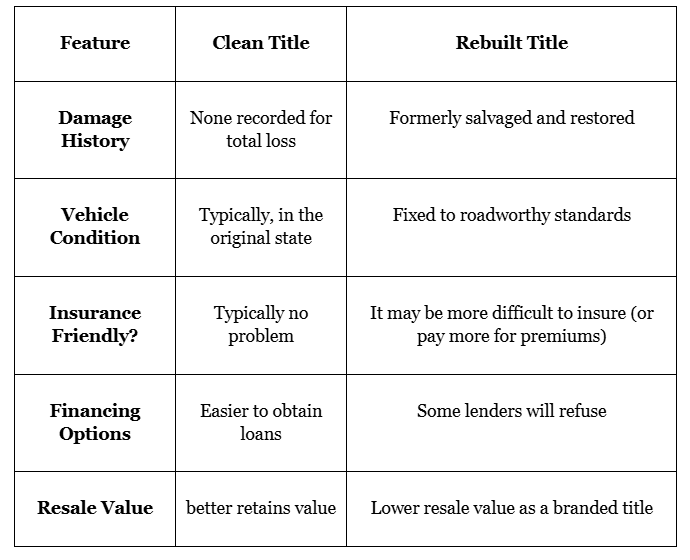
Rebuilt Title vs. Clean Title: Key Differences

Here’s a quick comparison of how rebuilt titles compare to clean titles:


So, Which One Should You Choose?


Here’s the reality: it matters about your objectives.


Opt for a Clean & Clear Title Car when:

  • You desire peace of mind.
  • You don’t like surprises.
  • You prefer simple insurance and resale.
  • You’re purchasing a car for everyday driving or for your family.


Opt for a Rebuilt or Salvage Title Car when:

  • You’re handy or have a trusted mechanic.
  • You’re on a budget and desire the best bang for your buck.
  • You’re fine with making some repairs (or already intend to).
  • You’re considering auctions from Salvage Reseller as a good bargain.


Just be sure to enter with your eyes open. Not all salvage vehicles are worth it, and not all clean title vehicles are perfect.


Must-Know Tips Before You Buy


Regardless of which title type you’re considering, here are some important steps to safeguard yourself:


  1. Inspect the Title Type.

Don’t take anything for granted; check the title status on the ad or ask the seller directly.


  1. Do a Vehicle History Report.

Take the VIN and obtain an in-depth history through Carfax, AutoCheck, or an equivalent service.


  1. Request Photos or an Inspection.

Particularly if purchasing online. Most auction sites (such as Salvage Reseller) provide high-res photos and inspection reports.


  1. Familiarize Yourself with Your State Laws.

Each state has varying regulations on salvage and rebuilt titles. Some have additional inspections or documentation.


  1. Budget for Insurance and Repairs.

Rebuilt or salvage vehicles are sometimes bargains initially, but will cost more over time. Think ahead.


Frequently Asked Questions (FAQ)


  1. What is the key difference between a rebuilt title and a clean title?

A clean title means no major total loss history, while a rebuilt title indicates a previously salvaged car that’s been repaired, inspected, and deemed roadworthy again.


  1. Is it worth buying a salvage title car from an auction site?

A salvage title car can be worth it if you understand repair costs, review inspection details, and accept potential insurance or financing limitations before purchase.


  1. Can a vehicle have a clean title but not a clear title?

Yes, a car may have a clean title with no total loss history, but still carry outstanding loans or liens preventing immediate ownership transfer.


  1. How do insurance companies treat a rebuilt title vs a clean title vehicle?

Insurance is generally easier and cheaper with clean titles, while rebuilt title cars may have higher premiums or limited coverage due to higher risk factors.


  1. Why are salvage title cars usually cheaper than clean title vehicles?

They cost less because of prior damage, reduced resale value, and potential insurance challenges. Buyers trade peace of mind for upfront savings and repair opportunities.


Final Thoughts


You have now realised that car titles are not just about paperwork; they are an entry to the past of a vehicle.


A clean title can look flawless on the surface. A clear title provides you with peace of mind as a homeowner. A salvage title vehicle may be a gem in the rough. And a rebuilt title? That’s a rags-to-riches story with some serious potential.


Knowing the difference between a rebuilt title and a clean title is ahead of the game and saves you costly blunders. It’s simply about finding the right title for your needs, your budget, and your risk tolerance.


And you may start bidding with confidence at Salvage Reseller when you’re prepared to look for your next car, whether it’s clean, clear, or a fixer-upper.

What’s Considered a True Sports Car And What Isn’t?

When you hear “sports car,” what flashes through your mind? A curvy red Ferrari eating up a coastal road? A Miata dancing through hairpin turns? That unmistakable growl of a tuned exhaust? We all have a picture, but not all “sporty” cars earn the title. So what actually makes a car a true sports car… and what doesn’t?


Let’s break it down. Whether you’re a weekend racer, a casual fan, or just browsing wrecked sports cars for sale, you’ll leave knowing exactly what counts, and what’s just playing dress-up.


What Is a Sports Car?

Let’s keep it simple: a sports car is built to perform. It’s not just transportation, it’s an experience. Here’s what separates the real deal from the pretenders:


  1. Lightweight and Quick

Less weight = more fun. Sports cars are light on the scale but heavy on thrills. The lower the curb weight, the sharper the turns and the faster the sprints. It’s physics, and it’s addictive.


  1. Rear-Wheel or All-Wheel Drive

The rear-wheel drive (RWD) provides good balance and allows driving out of corners like a professional. Modern cars, some advanced vehicles, include all-wheel drive (AWD) to get even more traction, particularly as they have high power.

Front-wheel drive? That’s for commuters.


  1. Two Doors, One Purpose

Most real sports cars are two-door for a reason: they’re built for the driver, not the carpool. It’s a design that screams performance, not practicality.


  1. Driver-Focused Interior

Slide into the seat and everything feels right: tight steering, low seating, instant response. In a sports car, the road talks back. And you’ll love every second of the conversation.


5. Power-to-Weight Ratio That Delivers

A big engine means nothing if it’s stuck in a tank. A true sports car balances power with weight to give you that punchy, responsive drive. No lag, no delay, just go.


Real Sports Cars (No Debate)

Let’s name names. These cars don’t just look the part, they are the part:


  • Mazda MX-5 Miata – Light, RWD, and built to corner like a champ. Pure joy on four wheels.
  • Chevrolet Corvette – All-American power meets sharp handling. The C8 mid-engine layout? Game-changer.
  • Porsche 911 – Legendary for a reason. Timeless design, razor-sharp handling, and easy to drive on a regular basis.
  • Toyota GR Supra – Bold looks, turbocharged punch, and track-day DNA.


If these don’t excite you… Check your pulse.


What Isn’t a Sports Car?

Let’s clear the air: not everything with a spoiler and loud exhaust counts. Here’s what doesn’t make the cut, no matter how “sporty” it looks:


1. Sporty Sedans

Honda Accord Sport. Toyota Camry TRD. Cool names, stiffer suspensions, but underneath? Still, every day commuters.


2. Performance SUVs

Sure, a Lamborghini Urus is fast. So is a Porsche Cayenne Turbo. But at the end of the day, they’re heavy, tall, and built for space, not agility.


3. Dressed-Up Compacts

A base hatchback with racing stripes and a wing? That’s cosplay, not performance. Unless it’s a tuned version like the Civic Type R, leave it off the list.


4. Most EV Commuters

EVs are quick, but speed alone doesn’t make a sport car. The Tesla Roadster or Porsche Taycan? Different story. A Nissan Leaf or Chevy Bolt? Great commuters, not track toys.


Wrecked Sports Cars: Hidden Gems

Now for the fun part, what if you could score a real sports car at a fraction of the price?


Platforms like Salvage Reseller make it possible. They give you access to wrecked sports cars for sale through Copart auctions, perfect if you’re restoring, rebuilding, or just hunting value. Here’s why it’s smart:


Lower Cost

That dream Porsche 911 or Corvette might seem out of reach, but as a salvage car? Suddenly, it’s within budget.


DIY Dream Project

Love getting hands-on? A salvage sports car is your perfect weekend wrenching challenge.


Rare Finds

Some limited editions or rare trims show up in auctions after minor accidents. With the right skills or the right shop, you could bring one back to life.


Parts Goldmine

Your engine, transmission, and performance parts alone might fetch more than the bid even without a rebuild.


Pro tip: You should always research the history of the car and the approximate cost of making repairs on it before bidding. It is not all steal deals.


How to Spot the Real Thing (and Dodge the Fakes)


Whether new, used, or salvaged, spotting a true sports car takes a trained eye. Here’s how to stay sharp:


  • Check the Specs: Look beyond looks. Focus on horsepower, torque, curb weight, and drivetrain.


  • Read Real Reviews: Test drive videos and driver feedback tell the real story.


  • Ignore the Badging: “Sport” trim doesn’t mean performance.


  • Use Trusted Sources: Salvage Reseller gives access to legit sports cars, many of which you won’t find at your local dealer.


Frequently Asked Questions


  1. What makes a car a true sports car, not just “sporty”?

A real sports car is lightweight, fast, and built for performance, not just dressed up to look cool.


  1. Can SUVs like the Urus or Cayenne be called sports cars?

They’re powerful, yes, but too heavy and tall to deliver the sharp handling sports cars are known for.


  1. Are electric vehicles considered real sports cars?

Only a few. Models like the Taycan and Roadster offer true performance, not just quick acceleration.


  1. Is a salvage sports car a good idea for beginners?

Yes, if you research the damage, estimate repairs, and buy from a trusted source like Salvage Reseller.


  1. What should I check before bidding on a wrecked sports car?

Look at damage reports, title status, and parts availability. Know the repair cost before making your move.


Final Thoughts


The drive is what defines a true sports car, not the badge. It’s about putting passion, strength, and accuracy into every inch. It’s the type of vehicle that, for the thrill alone, compels you to drive a longer distance home. Know what you want if you’re searching for that feeling, whether it’s salvage-title or brand-new. And if you’re ready for your next performance project? Salvage Reseller has a garage full of potential waiting for you.


Are Cars Really Cheaper at Dealer Auctions? Here’s the Truth

If you’ve ever attempted to save money when purchasing a vehicle, you may have encountered the concept of car auctions. Perhaps you’ve been curious: Are vehicles genuinely more affordable at dealer auctions?


The brief response is affirmative, but the actual details hinge on where and how you make your purchase. Let’s explore what’s truly happening behind those price labels at car auctions in Florida and other locations nationwide.


What Is a Dealer Auction, Anyway?


A dealer auction is a place where licensed dealers buy and sell cars. These vehicles include used, salvage, repossessed, and even brand-new models. Most of the time, these auctions are closed to the public. But that’s changed.


Thanks to online platforms like Salvage Reseller, everyday buyers now have access to these once-exclusive events, no dealer license required. That implies you can participate in the bidding for second-hand vehicles from any location.


The auctions with dealers occur online and on-site. A good number of the cars are imported by banks, insurance agencies, rental fleets, and other sources with high turnovers. When you are in search of true value, this is the place to be.


Why Are Cars Cheaper at Dealer Auctions?


Let’s be honest, cars at dealer auctions aren’t cheaper just by luck. There are a few solid reasons behind those lower prices.


1. Less Overhead

Car dealerships have expenses, rent, staff, inventory, and advertising, and all of that gets added to the price of a vehicle. Sellers at auctions don’t have those same costs. That makes it easier to list vehicles at lower prices, especially when the car is sold “as-is.”


2. “As-Is” Condition


Most cars at auction are sold just as they are. Some might be in great shape, while others could need repairs. Because sellers don’t spend time or money on touch-ups or repairs, the bidding often starts lower. If you don’t mind a little fixing up, it can be a great deal.


3. Quick Turnaround


Many auction sellers are eager to sell fast. Banks want to recover loan losses. Insurance companies want to clear out damaged vehicles. That need to move inventory quickly often leads to more competitive prices for buyers.


Where to Find the Best Auction Deals


If you’re located in Florida or elsewhere, online platforms now offer automobile auctions in Florida directly on your screen. There’s no need to go to a dealership or stroll through aisles of cars to locate what you need.


Using reliable platforms such as Salvage Reseller, you can explore listings, submit your bids, and even organize shipping, all from the comfort of your sofa. It’s the simplest method to purchase vehicles at auctions without interacting with intermediaries.


The Pros of Buying from a Dealer Auction


Lower Prices

You can often save thousands compared to retail, especially on salvage cars or vehicles that need light repairs.


Wider Selection

From economy cars to high-end SUVs and work trucks, auctions give you access to a much broader inventory than most dealerships.


Access to Unique Vehicles

Repossessions, lease returns, and insurance write-offs don’t always make it to public listings. At dealer auctions, you’ll find vehicles that aren’t available anywhere else.


Great for Resale

If you’re into flipping cars or simply want to invest in something with resale value, auctions are a great place to start.


But Wait, There Are Some Risks


Let’s be real. Auctions offer big savings, but there are a few things to keep in mind.

No Test Drives


At most auctions, you won’t get to take the car for a spin. You’ll rely on inspection reports, photos, and vehicle histories to make a smart decision.


“As-Is” Means Just That


After you purchase it, it belongs to you, including any issues. Should an undisclosed problem arise, you are responsible for managing the repairs. That’s the reason completing your homework is essential


Bidding Wars


Bidding may become fierce. Be cautious, as it’s simple to exceed your budget. Establish a boundary and adhere to it, regardless of how enticing victory may be.


Tips to Win at Car Auctions

Want to come out ahead? Here’s how to shop smart and avoid surprises.


Do Your Research

Revise the VIN report on all the vehicles. Check the types of damages, condition, title, and seller history. The more you are informed, the higher your success will be. 


Set a Budget

Decide what you’re willing to spend before the auction begins. That way, you won’t get caught up in the moment.


Factor in Repair Costs

A vehicle that appears inexpensive may require significant maintenance. Ensure you determine the overall expense prior to submitting a bid.


Plan for Transport

Some vehicles at auction can’t be driven off the lot. Whether you’re close to Florida or across the country, you’ll want to arrange towing or delivery in advance.


Are Auction Cars a Good Fit for Everyone?

Not always. If you prefer a detailed, certified, and warrantied vehicle, you might feel more comfortable at a traditional dealership.


But if you’re someone who values savings, understands a bit about cars, or is willing to put in a little extra effort, then auctions can offer incredible value, especially when you buy car auctions through platforms like Salvage Reseller.


Who Uses Dealer Auctions?


You might think auctions are just for professionals, but that’s not the case anymore. Here’s who’s taking advantage of them:

  • Car flippers who buy, fix, and sell for profit 
  • DIY mechanics who enjoy fixing up vehicles 
  • Regular drivers looking for a reliable ride at a lower price 
  • Exporters buying in bulk to ship cars overseas 

With more tools now available to the public, it’s never been easier to join the action and buy smarter.


Why Use Salvage Reseller?


Not all auction platforms are created equal. Salvage Reseller stands out by giving regular buyers access to the auction of used cars through Copart, without needing a dealer license.


Here’s what you get:

  • A simple online sign-up process 
  • Thousands of listings, from cars to trucks and motorcycles 
  • Detailed vehicle histories 
  • Real-time bidding tools 
  • Help with shipping your purchase 

You can participate in the Florida automobile auctions whether you are in Miami, Tampa, or elsewhere, because you can participate in the auction right in your home.


Frequently Asked Questions


  1. Can I join a dealer auction without having a dealer license?

Yes, platforms like Salvage Reseller let anyone join the auction of used cars with easy online access and registration.

  1. Are cars really more affordable at dealer auctions than at dealerships?

Often, yes. Vehicles at automobile auctions in Florida come with fewer markups, giving buyers access to more affordable pricing.

  1. What types of cars are usually found in dealer auctions?

You’ll find used, salvage, repossessed, and rental vehicles. Many car auctions include rare finds not seen at dealerships.

  1. How do I know if an auction car is a good deal?

Always check the vehicle’s VIN, condition report, and potential repair costs before you place a bid.

  1. What makes Salvage Reseller a better place to buy car auctions?

It offers public access to an auction of used cars, with great inventory, helpful tools, and no dealer license required. 


Final Thoughts: Are Dealer Auctions Worth It?

Absolutely, as long as you’re prepared.


The car can be cheaper at dealer auctions since you do a little more of the work, in terms of responsibility, you are avoiding the dealer’s competitive markup, and you are performing your own research.  But the rewards can be well worth it.


If you’re ready to take control of your next car purchase, skip the lot and start bidding online. The deals are out there, and your budget will thank you.


Ready to start bidding?

Check out current listings at Salvage Reseller and see how easy it is to join the auction and buy your next vehicle without the hassle.