

Repairable Vehicles: Is Buying a Wrecked or Totaled Car Worth It?
A wrecked or totaled car can be a smart buy if the math works. Here is how we help buyers tell repairable vehicles from money pits, estimate the repair, and set a firm maximum bid.

Jesus Lopez

| Published: November 3, 2026 | Last updated: November 3, 2026
Repairable vehicles can be worth it if you buy them for less than their repaired value minus every cost to fix, title and move them. A wrecked or totaled car is not automatically junk: many have cosmetic or bolt-on damage. The deal works when you estimate repairs honestly, inspect when you can, and set a firm maximum bid.
Key takeaways
- “Totaled” is an insurance decision about cost, not proof that a car can’t be fixed.
- Your maximum bid should come from the repaired value minus repairs, fees, transport, title work and a cushion for surprises.
- Flood, structural and unclear “mechanical” damage are where most repair budgets break, so inspect those vehicles at the yard 2 to 3 days before the sale.
- Through Salvage Reseller you can bid on Copart auctions without a dealer license, starting with a $600 refundable security deposit.
In this article6 sections
Wrecked, totaled, salvage: what’s the difference?

These words describe different things: “wrecked” describes what happened to the car, “totaled” describes the insurer’s decision, and “salvage” describes the title. Mixing them up is the most common mistake we see from first-time buyers. Knowing which one applies tells you what you can legally do with the car after you win it.
| Term | What it means | What it tells you as a buyer |
|---|---|---|
| Wrecked or crashed | An informal word for a car damaged in an accident | Nothing official about the title; read the listing |
| Totaled (total loss) | The insurer decided repairs cost too much compared with the car’s value | The damage may still be fixable for less than a shop would charge |
| Salvage title | A title brand many states issue after a total loss | Usually must be repaired and inspected before it can be registered for the road |
| Rebuilt title | A brand many states issue after repair and inspection | The car can be registered, but the history stays on record |
| Clean title | No brand on the title | It does not necessarily mean the car never had damage |
The rules for each title depend on the state, including what inspection a salvage car needs before it becomes rebuilt. Check with your state’s DMV before you bid. If you want the full picture of the salvage process, read our salvage title buying tips.
Who buys damaged cars and why?
Damaged cars attract buyers who can add value with skills, tools or market access that a regular retail buyer doesn’t have. The discount pays for the work and the risk. Here is who we see bidding most often:
- Mechanics and body shops. They repair at cost, so a car that is a total loss for an insurer can still leave them a margin.
- DIY owners. People who want a reliable daily driver and are willing to swap panels, lights or a radiator on weekends.
- Small dealers and flippers. They buy, repair, get the car through the state process and resell it.
- Exporters and international buyers. Many look for clean-title vehicles, because some countries refuse to register branded titles.
- Contractors and fleet owners. They want a work vehicle cheaply, and often browse salvage pickup listings for trucks with cosmetic damage.
What these buyers share is a plan before the auction. They know what the car is worth fixed, who will fix it and how it will get home.
How to estimate the repair on repairable vehicles

You estimate the repair by combining the listing details, the VIN history, an inspection when possible and real parts and labor prices. Then you add every non-repair cost and work backward to a maximum bid. Here is the process we recommend:
- Read the whole listing. Note the primary and secondary damage, the title type, the photos from every angle and the yard location.
- Run the VIN. A VIN report from our website shows the recorded history and whether the car came from an insurance company, a bank or a private seller. You can also check theft and salvage records for free with NICB VINCheck.
- Check the title history. NMVTIS, the federal title history system, lists approved providers that show title brands reported by states.
- Inspect in person if you can. Inspections at the Copart yard must be done 2 to 3 days before the auction; there is no lot access on auction day and no test drives.
- Price parts and labor. Get quotes for what you see, then assume there is more damage behind bumpers, under the hood and inside doors.
- Add the non-repair costs. Auction and broker fees, transport, title processing and any state inspection for a rebuilt title.
Maximum bid = repaired market value − repairs − fees − transport − title and inspection costs − a cushion for surprises.
The cushion is what separates profitable buys from regrets. Photos rarely show bent brackets, cracked mounts or a damaged wiring harness. For fees, use the calculator in the “Support” section under “Copart Fees,” or the one on each vehicle page, before you bid.
What common damage types usually mean
| Damage label | What to check | Budget risk |
|---|---|---|
| Front end | Radiator, headlights, airbags, frame rails | Medium to high |
| Rear end | Trunk floor, bumper supports, frame | Medium |
| Side | Doors, pillars, curtain airbags, suspension | Medium to high |
| Hail | Panels, roof, glass | Lower mechanical risk, mostly cosmetic |
| Water or flood | Wiring, electronic modules, interior | High |
| Mechanical | Engine and transmission | High; inspect before buying |
A “mechanical” label can mean the car needs major work such as an engine or transmission. When you are ready to plan the actual work, our step-by-step renovation guide walks through it.
Where to find repairable salvage cars for sale

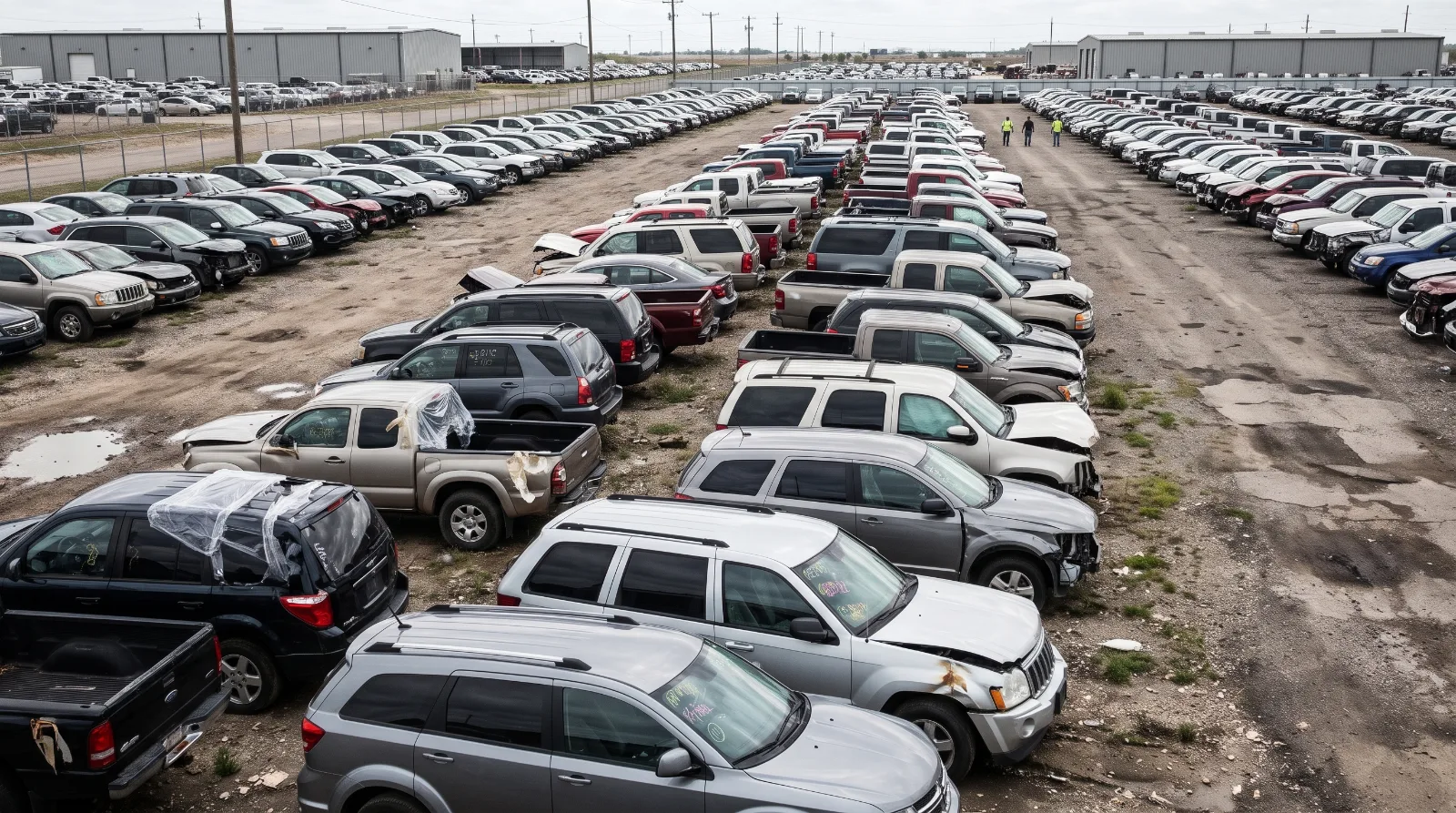
Most repairable salvage cars for sale come from insurance total losses sold at online auctions such as Copart. Insurers, banks, rental companies and private sellers list wrecked, crashed and accident damaged cars there every day. Many lots require a dealer license, which is where a broker comes in.
Salvage Reseller is an authorized Copart broker, not a dealer: we don’t own or repair the vehicles. You register with your ID, place your own bids on our website and, if you win, pay the vehicle plus fees. Here is why buyers use auction brokers instead of going alone.
To start, you need a valid ID (a US driver’s license or a passport; outside the US and Canada, a valid passport) and a refundable deposit:
- $600 deposit: lets you bid on one vehicle up to $6,000.
- Above $6,000: the deposit is 10% of your maximum offer.
- A second vehicle at the same time: add another $600.
In the search engine you can filter damaged salvage cars by make, location and title type. You can search vehicles by title type and add any car to your watch list to get an email when it gets a sale date.
Know the sale type before you bid. “Pure Sale” lots have no reserve and go to the highest bidder. Others have a reserve price, and the seller may send a counteroffer if your bid falls short. Some have a Buy It Now price. To learn more about the auction side, see how salvage auctions work.
When should you walk away from a wrecked car?

Walk away when the numbers stop working or when you can’t verify the damage that matters most. Passing on a car costs nothing; overpaying for the wrong one can cost more than a clean used car. These are the red flags we tell buyers to respect:
- The math fails with a cushion. If the deal only works when nothing goes wrong, it doesn’t work.
- Flood damage on an electronics-heavy car. Water can reach modules and wiring that photos won’t show.
- Structural damage you can’t confirm. Pillars, frame rails and floor pans need proper equipment and skill to repair.
- “Mechanical” with no inspection. An unknown engine or transmission problem can erase your margin.
- Title questions. We only have the information the seller provides, so check the title details and the VIN report before bidding.
- Your country won’t register it. Exporters should confirm with their registration authority before buying.
- The car is marked “coming soon.” We don’t recommend bidding before a sale date is assigned.
Bidding fever is a real cost. A preliminary bid lets the system bid for you up to your maximum, and you may win below it. But once your pre-bid is outbid, you can’t raise it in the live auction without posting a new deposit, which keeps your discipline honest.
Ready to bid on repairable vehicles?
Repairable vehicles reward buyers who do the homework: know the title, price the repair, add every fee and set a limit. New wrecked and damaged cars for sale enter Copart yards daily, so the right one may show up this week. Register on Salvage Reseller, make your refundable deposit and start bidding. Questions? Call us at +1-954-671-0160, email [email protected] or use the Live Chat.
Frequently Asked Questions
Are repairable salvage cars worth buying?
They can be, if you pay less than the repaired value minus repairs, fees, transport and title costs. Buyers who can do or source repairs at a fair price tend to benefit most. Cars with flood, structural or unknown mechanical damage carry more risk, so inspect them or factor in a larger cushion before setting your maximum bid.
Do I need a dealer license to buy wrecked cars at auction?
Not through Salvage Reseller. As an authorized Copart broker, we let individuals bid without a dealer license or a registered business. You register on our website with a valid ID, such as a US driver's license or a passport, and make a refundable security deposit starting at $600 before you can bid or use Buy Now.
Can I test drive a damaged car before bidding?
No. Vehicles sit in Copart yards and Copart does not offer test drives. You can visit the yard to inspect the vehicle with a basic Copart.com membership, but inspections must be completed 2 to 3 days before the auction. On auction day there is no lot access, and bidding happens only online.
Can I drive a salvage title car after buying it?
In many states a salvage title car must be repaired and pass a state inspection before it can be registered and driven on public roads, often receiving a rebuilt title. The exact rules depend on your state, so check with your local DMV before you bid. You can pick it up with a trailer or tow truck, or get a transport quote.
How long does it take to get the title after winning?
Title processing may take up to 30 business days. We need your signed Power of Attorney, sent as an original by regular mail, before the title can be processed. You receive the bill of sale and the title. For international buyers, the title goes to the international shipping carrier so they can schedule the shipment.
Written by Jesus Lopez
As a dynamic and forward-thinking Systems Engineer, my journey began with a bachelor's degree in 2011, laying the technical foundation for a career marked by continuous growth and innovation.


