

Inspect before you bid
Every auction vehicle sells as is, so what you learn before bidding is all the protection you get. Here is exactly what the listing tells you, how to see a vehicle in person at Copart, and how to hire a professional to look for you.
What we can and cannot do as your broker
SalvageReseller is a registered Copart broker. We give you access to the auctions and place licensed bids on your behalf; the vehicles themselves stay at Copart facilities and never pass through our hands. That means we do not set or control prices, we cannot examine vehicles for you, and we cannot verify or guarantee the condition, mileage, keys or history of any lot. Every vehicle sells as is, where is.
The photos, damage codes and details you see on a listing come from Copart and the sellers. They are a reference published as a convenience, not an inspection and not a guarantee. Even a Run and Drive badge is narrow: it only means that when Copart checked the vehicle in, it started, on its own or with a jump box, went into gear and moved forward. It does not promise the vehicle is roadworthy or that it will start again on pickup day. The only way to know a vehicle's real condition is to inspect it.
There are two honest ways to do that before you bid. Choose based on how far away the vehicle is and how much is riding on the purchase. Bids are binding once placed, so inspect first, not after.
Two ways to inspect before you bid
You can go to the Copart yard and check the vehicle yourself, or you can hire a professional inspector to go for you. Both put real eyes on the actual car, which the listing photos never can.
Register with Copart, drive to the yard and work through the vehicle yourself with your own eyes and hands.
Copart membership from about $99 a yearSend an experienced mechanic to the yard and receive a written report with photos before the sale.
Around $250, set by the providerInspect the vehicle in person
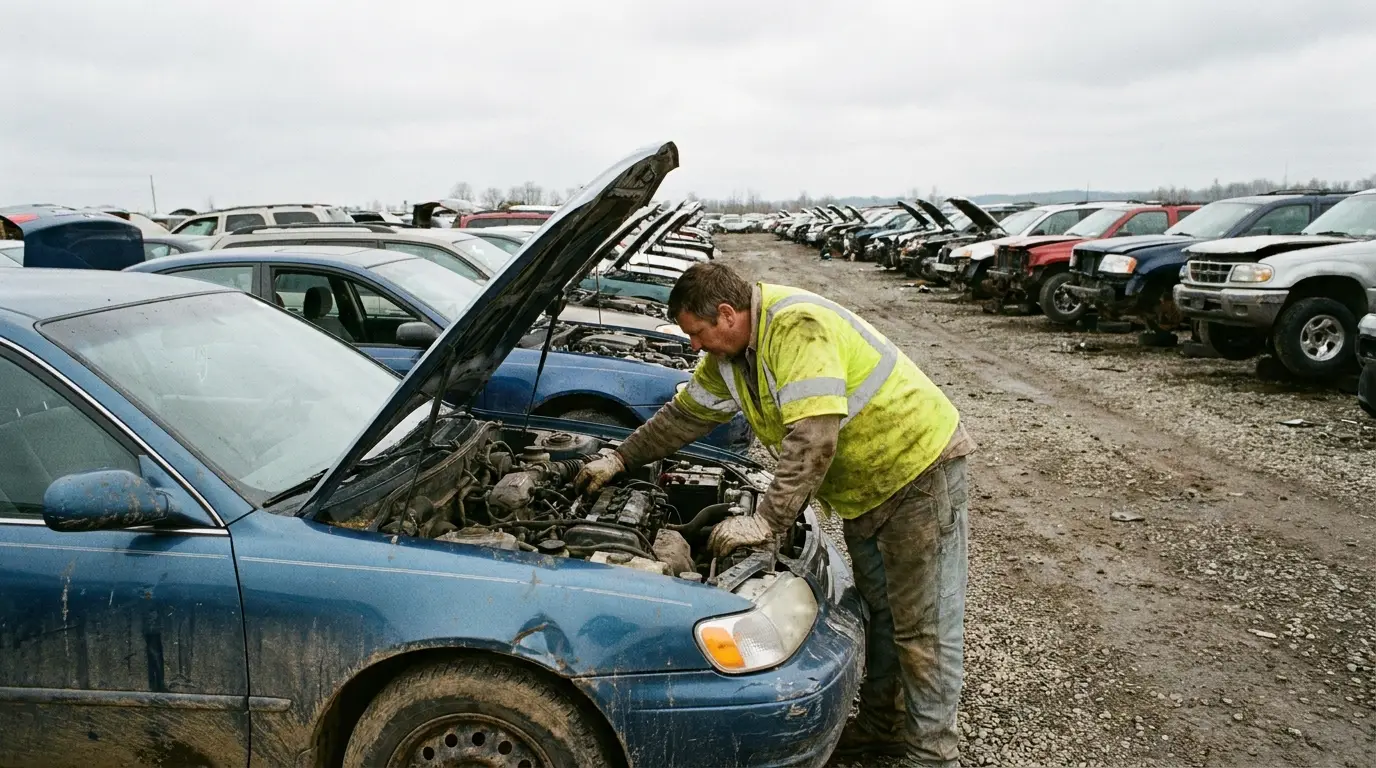
Nothing replaces standing next to the car, opening the hood and looking underneath. Copart invites buyers to inspect vehicles in person at the yard where they are stored, generally Monday to Friday during business hours, at more than 200 locations across the country. Below is how to get in and exactly how to work through a salvage vehicle the way a professional does.
Getting into the yard
To preview vehicles in person you have to be a registered Copart member. At a minimum that is Copart's Basic membership, currently around $99 a year; the Premier tier is around $249. This membership is with Copart directly and is completely separate from your SalvageReseller account. Prices are set by Copart and can change. Days and hours vary by location, and you will want to confirm the exact lot is on site and viewable, so call the specific yard before you make the drive.
What to bring
A high visibility safety vest and closed toe shoes are required to walk the yard. Bring a good flashlight, your phone for photos, a pair of work gloves, a couple of paper towels for checking fluids, and a printed copy of the lot number, the listing photos and the details so you can compare them against the real vehicle on the spot. A small magnet can help reveal body filler over old repairs.
Yard rules to expect
- A safety vest and closed toe shoes are required at all times.
- Stay in the designated sale rows and watch for loaders and heavy equipment moving through the yard.
- Only vehicles currently listed for sale may be inspected.
- You can open the hood, look underneath and take all the photos you want.
- Tools of any kind, including diagnostic code readers, are not allowed in the yard.
- Never try to start a vehicle without a Copart employee, and test drives are not permitted.
How to work through the vehicle
Inspect the same way every time so nothing gets skipped. Walk the outside first, then the engine bay, then the interior, then underneath, and finish with the numbers and paperwork. Take a photo at every step so you can study it again before the auction closes.
Body, paint and structure
- Sight down each side of the car in daylight. Ripples, waves or a color that does not quite match from panel to panel mean bodywork has been done.
- Look for overspray on the rubber trim, glass and plastic, and for masking lines; these give away a repaint that is hiding a repair.
- Check the panel gaps. Doors, hood and trunk that sit uneven or do not close cleanly point to a hard hit or bent structure.
- Open the hood and trunk and look at the inner fenders, radiator support and trunk floor for kinks, crumpled metal or fresh welds that are not the factory spot welds.
- Run a magnet along lower doors, rockers and wheel arches. Where it does not stick there is filler over rust or a dent. Look for bubbling paint and holes from the inside out.
Under the hood
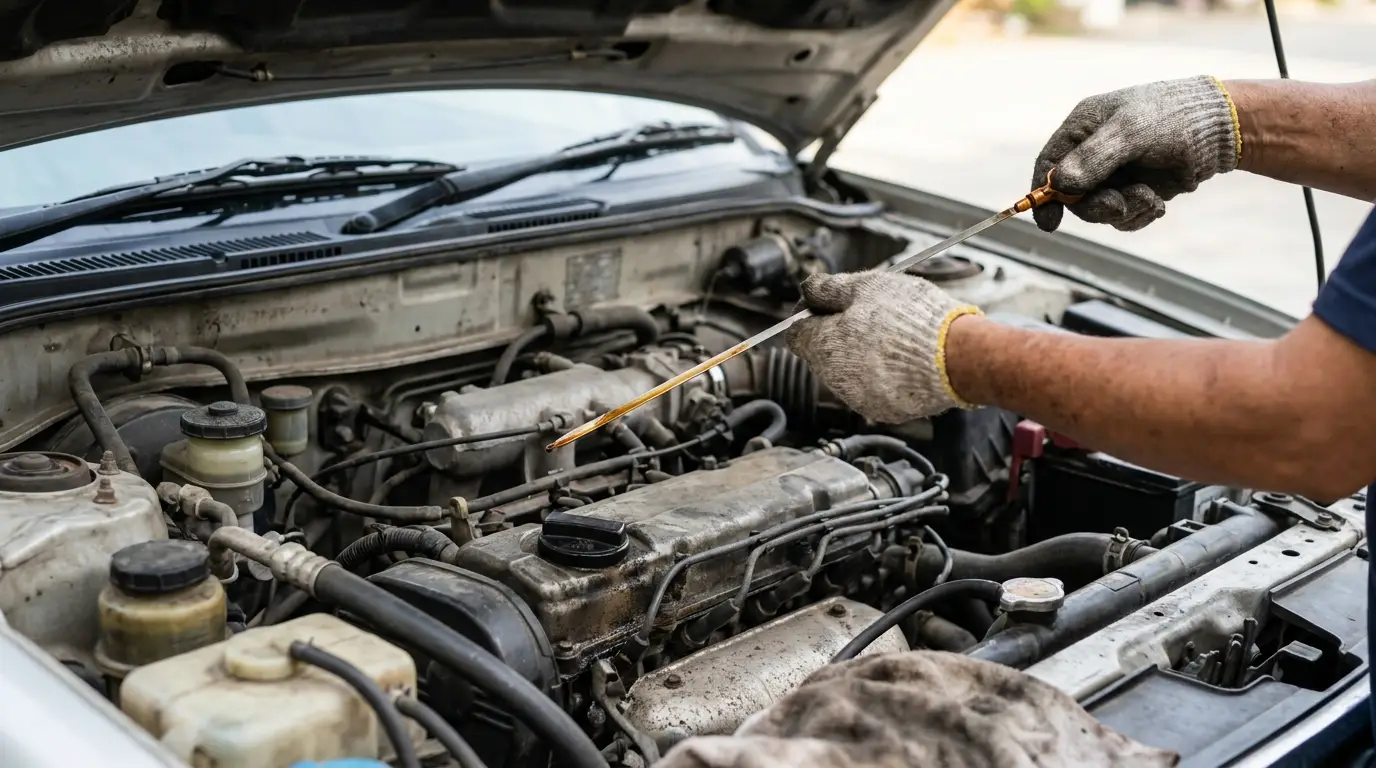
- Pull the engine oil dipstick. Clean amber to light brown is good; a gray, milky or foamy film means coolant is mixing in, a serious warning.
- Pull the transmission dipstick if it has one. Fluid should be pink or red and not smell burnt; brown, dark fluid signals a tired transmission.
- Open the coolant reservoir and radiator cap. An oily sheen or a mustard colored film is a head gasket warning.
- Look at the battery for a brand new one and clean terminals; a fresh battery on an old car often means someone was working hard just to make it start.
- Scan belts and hoses for cracks, and look on the ground under the front of the car for fresh oil, coolant or transmission drips.
- Check the airbag area. A cut or deployed airbag, or a dashboard that has been opened, adds real cost to bring back to legal condition.
Inside the cabin
- Flood damage is the quiet deal killer. Lift the floor mats and press the carpet for damp, and put your nose inside for a musty or heavily perfumed smell that is covering one.
- Check the spare tire well, under the seats and the seatbelt webbing pulled all the way out for a water line, silt, sand or rust where there should be none.
- Look at the airbag covers on the wheel and dash. Missing, loose or mismatched covers usually mean a previous deployment.
- With the key turned on by a Copart employee, note which warning lights stay lit: airbag, ABS, check engine and traction lights all cost money to clear.
- Look under the dash and at the fuse box for corrosion or rust on screws and connectors, another fingerprint of water damage.
Underneath and running gear
- Look along the frame rails and unibody for folds, kinks or fresh undercoating sprayed on to hide a repair.
- Check the suspension for bent control arms and leaking struts, and read the tires: heavy wear on one edge or one axle points to alignment or suspension damage.
- Confirm the catalytic converter is still there. Theft is common, and a missing converter is an expensive surprise.
- Note any fluids dripping underneath and where they are coming from, matching them to what you found in the engine bay.
Numbers, keys and paperwork
- Match the VIN plate on the dash to the sticker in the door jamb and to the lot details. A mismatch is a serious red flag.
- Photograph the odometer and compare it to the reading and the odometer designation on the listing.
- Confirm keys are present if the listing says so; missing keys add cost, and some options cannot be checked without them.
Know the limits, even in person
A thorough personal inspection tells you a great deal, but it is still limited. You cannot start or drive the car, no tools or scanners are allowed in the yard so you cannot read fault codes, and nothing behind a missing key can be checked. Treat what you find as a well informed estimate, leave room in your budget for surprises, and price the whole purchase with the fee calculator before you set a maximum bid.
Hire a professional inspector: CarInspector.US
When the vehicle is three states away or the purchase is too important to judge from photos, put a professional on site. CarInspector.US is the inspection company we point our members to for Copart lots: they serve every Copart location in the United States, and most of their inspectors are experienced ASE certified mechanics, some with manufacturer certifications. You order online, an inspector is assigned to the yard where your lot sits, and the written report with photos is available online within about 24 hours after the inspection.
What their inspection covers
- Level and condition of all accessible fluids
- Engine started where possible, with transmission engagement evaluated
- Climate control tested for heat and cold
- Interior and exterior checked for damage and signs of prior repair
- Digital photos of the vehicle and every damage found
- Written report you can read online, with sample reports on their site
Pricing and booking
A standard Copart pre purchase inspection currently runs $250, and $350 for commercial vehicles, motorhomes, boats and exotics. Prices are set by CarInspector.US, subject to change and non refundable once ordered, even if the yard denies access or keys are missing, so order only when you are serious about the lot. Book while the auction still has at least two full business days left, not counting the day you order and the day of the sale, since inspectors work weekdays only. Ordering takes a few minutes on their site, or call them at 888 615 7555.
The honest limits
The same auction rules bind every inspector: no test drives, and because tools and scanners are not allowed inside Copart yards, no OBD code reading happens there. Vehicles are not put on a lift, so hidden undercarriage damage can be missed, and anything locked behind a missing key goes unchecked. CarInspector.US is an independent company with its own terms, and no inspection can guarantee a vehicle is free of hidden defects. What it does is shrink your risk dramatically for a fraction of what one bad surprise costs.
Order an inspection at CarInspector.USInspections: common questions

