Cheap Cars for Sale: Where the Real Deals Are and What Each Budget Buys
The cheapest cars in the U.S. usually sell at insurance auctions, not on dealer lots. Here is where to find them, what $1,000 to $5,000 really buys, and the full cost once fees and shipping are added.

Jesus Lopez


| Published: November 25, 2026 | Last updated: November 23, 2026
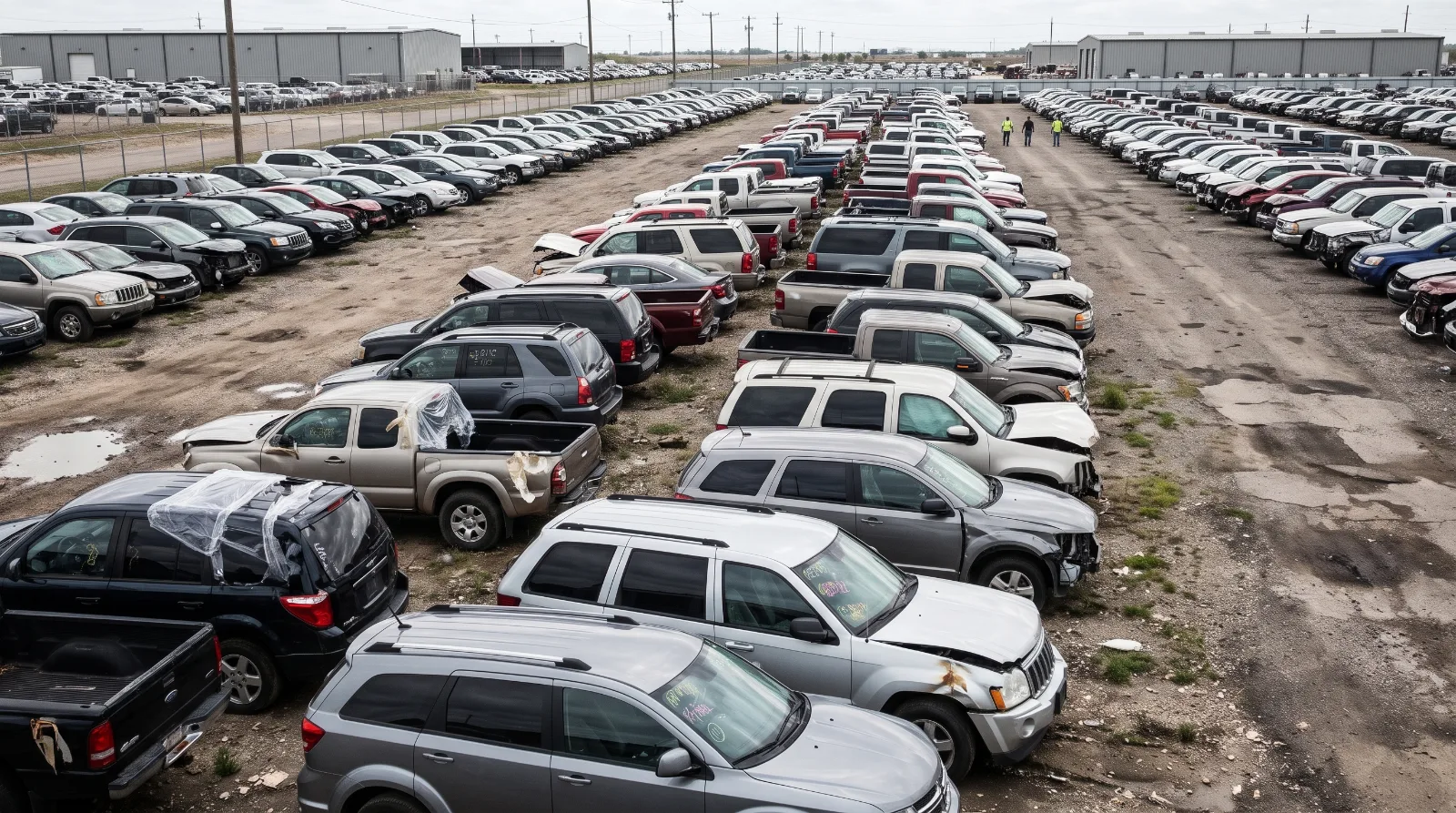
If you want cheap cars for sale, the biggest discounts in the U.S. usually show up at insurance auctions like Copart, not on dealer lots. Totaled, theft-recovered and bank-owned vehicles go to the highest bidder, and through Salvage Reseller anyone can bid online without a dealer license. The catch: every car sells as-is, so repairs, title and transport are on you.
Key takeaways
- Insurance auction cars sell far below retail because they are damaged, totaled or unwanted, and they are sold as-is.
- The cheapest lots are usually non-runners, flood or fire cars and junk titles, while run-and-drive cars with light damage cost more but are easier to put back on the road.
- Your real price is the winning bid plus Copart fees, our broker fee, title processing, taxes and shipping.
- You can start with a refundable $600 security deposit and bid from anywhere, then ship the car to your door.
In this article8 sections
- 01Where can you find cheap cars for sale?
- 02Why are auction cars so much cheaper than retail?
- 03Cheap damaged cars, accident cars and junk cars: what are you really buying?
- 04What can you buy on a $1,000, $3,000 or $5,000 budget?
- 05Cheap cars near me: tow yards, junkyards or online auctions?
- 06How do you buy a cheap car at Copart without a dealer license?
- 07How much does a cheap auction car really cost?
- 08Ready to find a cheap car? Start bidding today
Where can you find cheap cars for sale?
You can find cheap cars at dealers, from private sellers, on online marketplaces, at government or police auctions and at insurance auctions, and prices tend to drop as you move down that list. What you give up in exchange is convenience: the cheaper the source, the more of the work falls on you.
| Source | Price level | Typical condition | Main catch |
|---|---|---|---|
| Used car dealers | Retail, with dealer markup | Reconditioned, ready to drive | Highest price and add-ons |
| Private sellers | Below dealer retail | Mixed, usually running | No protection, one car at a time |
| Online marketplaces | Close to retail | Mixed | Competing with dealer listings |
| Government and police auctions | Below retail | Fleet cars, often high mileage | Small, local selection |
| Insurance auctions (Copart) | Often far below retail | Damaged, totaled, recovered thefts, some clean titles | As-is, fees, transport and title work |
Most advice stops at “try an auction.” This article shows what your money actually buys and what the final bill looks like. If you are focused on running used cars specifically, our cheap used cars buyer’s guide covers that side in depth.
Why are auction cars so much cheaper than retail?
Auction cars are cheap because insurers, banks and fleets want them sold fast, not fixed. When an insurer declares a car a total loss, it pays the owner and sends the vehicle to auction to recover part of that money. The buyer takes on the repairs, the paperwork and the risk, and that risk is priced in.
The discounts can be steep. Winning bids can land far below retail, and some cars sell for a small fraction of Copart’s estimated retail value. Not every car goes that low, but it shows how far auction prices can sit from dealer prices.
The sale type matters too. A Pure Sale lot has no minimum bid or reserve, so it goes to the highest bidder at the close. Other lots carry a reserve: if the minimum is not met, the seller can decline and relist the car, which is why a vehicle you saw “sold” may appear again.
Cheap damaged cars, accident cars and junk cars: what are you really buying?

Cheap damaged cars are priced by how much work they need, so the damage label and the title tell you most of the story. Read both on every listing before you think about the bid.
Cheap accident cars for sale
Cheap accident cars usually carry front-end, rear-end or side damage labels. Rear-end and cosmetic damage on a commuter car is often the sweet spot for a first auction buy, because the engine and drivetrain are more likely to be untouched. Heavy front-end hits can reach the radiator, engine mounts and airbags, which pushes repair costs up fast.
Cheap junk cars for sale
Cheap junk cars for sale often carry junk, parts-only or certificate-of-destruction titles. Depending on the state, many of these can never be registered for the road again, so they make sense for parts, mechanics or specific export markets rather than daily driving. In Colorado and Wisconsin, these titles can only be bought with a preliminary bid, not in the live auction.
Flood, fire and mechanical damage
Flood, fire and mechanical lots tend to bring the lowest bids, and for good reason. A “mechanical” label can mean the car needs an engine or transmission, so we recommend inspecting it at the Copart yard before you bid. Before buying any of these, learn what each title type means for registering the car in your state.
What can you buy on a $1,000, $3,000 or $5,000 budget?
Your budget decides the kind of car you get, not just the model: the lower the bid, the more work the car usually needs. Use these ranges as a guide to what tends to show up, not as fixed prices.
- Under $1,000: mostly non-runners, flood or fire damage, older high-mileage cars and junk or parts-only titles. Best for parts, project cars or experienced mechanics.
- Around $3,000: older sedans and SUVs with collision damage, some with a run-and-drive note from the yard. Plan for repairs and a state inspection if the title is salvage.
- Around $5,000 and up: more room for newer commuters with cosmetic or rear-end damage, plus some clean-title cars that export buyers and small businesses look for.
Popular brands show up across all of these ranges, so it pays to search by make. Browsing salvage Ford vehicles for sale, for example, shows sedans, SUVs and pickups side by side with their damage and title type.
Here are some of the latest cars our buyers won through Salvage Reseller:
Recent sales on SalvageReseller.com
| Vehicle | Title | Yard state | Winning bid | Date |
|---|---|---|---|---|
| 2008 Acura Tl | Cert Of Salvage > 75% Damage | MD | $1,450 | Nov 23, 2026 |
| 2019 Infiniti Q70l 3.7 Luxe | Certificate Of Title | NY | $1,000 | Nov 22, 2026 |
| 2016 Mercedes-Benz Cla 250 4matic | Certificate Of Title | FL | $3,450 | Nov 20, 2026 |
| 2018 Ford Explorer Police Interceptor | Certificate Of Title | AR | $3,200 | Nov 20, 2026 |
| 2010 Chevrolet Equinox Ltz | Certificate Of Title | MD | $1,400 | Nov 19, 2026 |
Winning bid at the Copart auction, before fees and taxes. These are real purchases by our buyers.
These are just a few of the purchases our buyers make every week. The mix shows that cheap at auction does not only mean old economy cars: luxury models and family SUVs can land within reach when they come with damage.
Cheap cars near me: tow yards, junkyards or online auctions?
Tow yards with cheap cars for sale and local junkyards can work if you live nearby, but their selection is small and changes slowly. Online insurance auctions flip that: vehicles sit at Copart yards across the country, and you can bid on most of them from your phone or computer (some states have restrictions, such as no purchases in Kansas or Missouri).
Location still matters for your total cost, because the car has to travel to you. On each vehicle page you can see the yard, and our team can give you its exact address. You can also browse cheap salvage cars for sale and filter by state or location to keep shipping short.
To get a free transport quote, enter your ZIP code in the Transportation section of the vehicle page. A transport partner with licensed and insured carriers handles the move. You can pick the car up yourself only if you have a tow truck or trailer.
How do you buy a cheap car at Copart without a dealer license?

You buy through a broker: Salvage Reseller is an authorized Copart broker, so you bid with our access instead of needing your own dealer license or registered business. Here is the process in short.
- Register on the website and upload your ID: a U.S. driver’s license or any passport (outside the U.S. and Canada, a valid passport).
- Make the security deposit in the Buying Power section of your profile: at least $600. Each $600 covers one active bid at a time, and the deposit is refundable.
- Research the car: photos, damage label, title state and a VIN report. A free NICB VINCheck shows theft and salvage records.
- Check title history through NMVTIS, the federal title history system, to spot past brands.
- Inspect if you can: in-person visits must be done 2 or 3 days before the sale. Copart does not offer test drives.
- Bid: place a preliminary bid with your maximum or join the live auction, but not both.
- Pay and ship: pay within three business days by bank wire or cash deposit, arrange transport, and wait for the title in your name (processing can take up to 30 business days).
Cars cannot be driven off the yard and are sold without plates, so register at your local DMV once the title arrives. For more detail on each step, follow our step-by-step online buying walkthrough.
How much does a cheap auction car really cost?
The real cost is the winning bid plus Copart fees, our broker fee, title processing, sales tax where it applies and shipping, before any repairs. A low bid can still become an expensive car if you skip these numbers.
- Fees: Copart and broker fees scale with the price. The fee calculator under Support, then Copart Fees, shows the total for any bid, and you will find it on vehicle pages and the live auction page too.
- Shipping: get the quote before bidding, not after winning.
- Repairs and inspection: salvage cars usually need parts, labor and a state inspection before they can be registered.
If you are comparing brokers to find the cheapest Copart broker, compare the full out-the-door total for the same bid, not a single fee. Set your maximum bid with all costs included, and let a preliminary bid work for you: it only goes one increment above the current bid, so you may win below your maximum.
Two more ways to avoid overpaying: skip lots marked “coming soon” and add them to your watchlist instead, and remember that if a seller approves your high bid on a reserve lot, you are obligated to buy.
Ready to find a cheap car? Start bidding today
Cheap cars at auction are real, but the good deals go to buyers who read the listing, run the VIN and price in every cost before they bid. New vehicles enter Copart every day, from parts cars to clean-title commuters.
When you are ready, register on Salvage Reseller, place your refundable deposit and see the cars for sale now. New lots are added daily, so check back often or save the ones you like to your watchlist.
Frequently Asked Questions
Can I pay cash for a cheap car at a Copart auction?
Yes. Through Salvage Reseller you can pay by bank wire transfer or by cash deposit at any Bank of America branch, within three business days counting the auction day. Credit cards, PayPal and similar services are not accepted, and you never pay at the Copart yard. If payment is not received within seven calendar days, you lose your security deposit.
Can I find used cars under $5,000 at auction?
Yes, many auction cars sell for under $5,000, and some sell for much less. Most cars at that level have damage, high mileage or a salvage or junk title. Remember to add Copart fees, our broker fee, title processing, taxes and shipping to the bid to see your real total.
Can I test drive a cheap auction car before I bid?
No. Copart does not offer test drives, and auctions are strictly online. You can visit the yard to inspect the vehicle with a basic Copart.com membership, but the visit must be done 2 or 3 days before the sale. You can also hire an inspector or buy a VIN report from the vehicle page.
Is Salvage Reseller a cheap car dealership near me?
No. Salvage Reseller is an authorized Copart broker, not a dealership, and it does not own or repair vehicles. Every car listed on our website is located at a Copart yard. You register, leave a refundable deposit and bid yourself, then arrange shipping to your address with a free quote from the vehicle page.
Does Salvage Reseller offer financing for auction cars?
No, we do not offer financing directly. Some customers have used outside lenders such as LightStream to buy auction vehicles, but we are not affiliated with any lender. Confirm eligibility and loan terms directly with the lender, and have your funds ready before you bid, because payment is due within three business days.
Written by Jesus Lopez
CTO and owner of Inloher Corp, the company behind SalvageReseller.com, the longest-running Copart broker in America. For 22 years we’ve given everyday buyers access to Copart auctions, with no dealer license needed. 35,000+ sales and 250,000+ members later, we’re ready to help you.